Post Wedding Blues: The Emotional Hangover No One Talks About
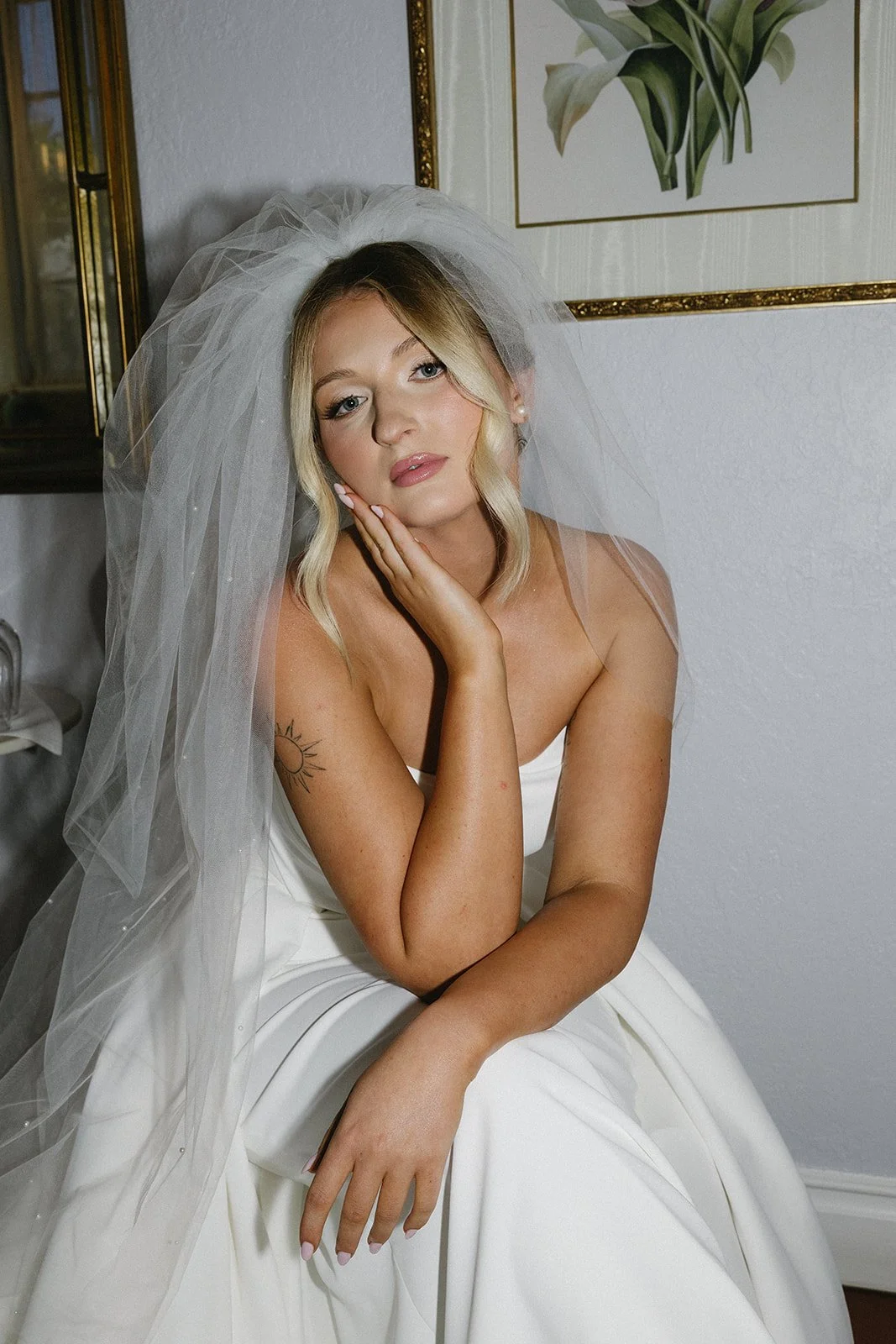
Photo credit: Trinity Rose Photography, The Hollins House, Santa Cruz
Post Wedding Blues: The Emotional Hangover No One Talks About
Nobody really talks about the post-wedding comedown. The slump, the void, the uncomfortable “now what” feeling. In fact, very little attention is given to what happens after you ride off into the proverbial sunset.
The wedding industry is built on fantasy and anticipation. Planning, excitement, countdown… reveal!
But for many women, the fantasy and anticipation begins before there is even a wedding to plan.
Long before the algorithm starts serving you dresses and venues, there are fairy tales, princesses, and the promise of happily ever after. And there is the cultural messaging (much of it unconscious) that marriage represents the ultimate arrival in a woman’s life.
Even though women’s lives are no longer explicitly defined by becoming wives and mothers, those older messages have not disappeared. They’ve simply become intertwined with modern ideas about romance, beauty, success and self-expression.
Then you get engaged, and the entire machine comes roaring to life.
Suddenly, the algorithm is in your face with dreamy venues, designer dresses, Bridgerton-inspired florals, bridal workouts, skincare regimens, and perfectly curated, impeccably photographed weddings.
Because weddings are an enormously profitable luxury industry, there is an entire commercial ecosystem devoted to getting you to buy into the dream.
It is seductive and relentless.
The more you are shown, the more you want. The more you want, the more consequential every decision begins to feel.
And because you are continually told that this is the most significant day of your entire life, the stakes become impossibly high.
That is an immense amount of pressure to place on one day. It is easy for perfectionism to take over. The right this, the perfect that. The color palette, the tablescape, the weather, the “guest experience.”
The execution becomes so consuming that it’s easy to lose sight of the forest for the trees (and the relationship for the wedding.) The wedding becomes something you must get right rather than being an authentic celebration of your love, or a transformational threshold to cross.
For a year or more your life has been organized around this day. Every conversation is about your wedding. Your weekends are full of vendor meetings, tastings, fittings, bridal showers and bachelor parties, as you build towards “the happiest and most special day of your whole lives.”
In a culture where people are increasingly hungry for visibility, relevance and the feeling that their lives matter, becoming a bride can place you at the center of your own world for a sustained period of time.
Being seen, celebrated and made to feel special is seductive and intoxicating.
For months, everything is moving toward a single emotional peak…
And then, just like that, it’s over.
You got married.
It was beautiful.
People post photos.
You go on your honeymoon.
But then the texts slow down. The vendors you’d been working with intimately disappear. The attention shifts. The algorithm moves on. The dress goes into the closet. The Pinterest board gets deleted. You go back to work.
Then comes the hangover.
It might feel like sadness, restlessness, irritability, or flatness without any obvious reason. You might feel uninspired, directionless, or unmoored. Maybe you feel ashamed that you are not happier, or feel guilty for being ungrateful.
That feeling of emptiness, uncertainty, and disorientation isn’t an anomaly. The come down is almost inevitable; it’s built into the experience.
And perhaps there is another disappointment beneath the obvious comedown: whatever magical thing you thought would happen in that climactic grand finale didn’t happen. Fairy tales never actually tell us what “happily ever after” is, they simply end at the emotional crescendo and leave us to imagine what happens next. What they promise is elusive and ephemeral at best, and completely unachievable at worst.
Your wedding is over and what follows is a collapse of anticipation, the loss of a unifying project, a withdrawal of communal attention, a nervous system down-regulation after months of activation, an energy vacuum, and uncertainty about what’s next. (Research shows that uncertainty is one of the most destabilizing emotional states for human beings to tolerate.)
Energy naturally pendulates. Expansion follows contraction, and vice versa. And your wedding day (and all of the energy you poured into it) was the ultimate expansion. You were full to the point of brimming and now… deflation.
Many couples are not prepared for the energy dip that happens after their wedding. Even if your relationship is wonderful, even if you’re wildly happy and in love, you can still experience a kind of post-wedding whiplash.
Modern wedding culture creates an extraordinary emotional ascent without preparing anyone for the descent. It concentrates fantasy, pressure, purpose, identity, attention and anticipation around one day, and then it's just gone. The whole mechanism is a set up, and the crash is proportional to the high. What you are experiencing is the emotional aftershock of having ridden an extraordinary wave and finding yourself, suddenly, back on level ground.
A couple might start looking for the next big thing, the next project to throw themselves into, to prematurely fill the void because it’s so uncomfortable to just sit with the fallow period. As I said earlier, uncertainty is one of the most uncomfortable human emotions to be with, especially in a culture that prizes momentum over reflection.
If this happens to you, it does not mean you married the wrong person, or are failing at marriage, or that your wedding wasn’t wonderful. It means that you have come down from something enormous.
Knowing that cannot prevent the dip entirely. But sometimes just knowing that the crash is real, and understanding why it happens, is enough to meet it (and yourself) with a bit more gentleness and self-compassion.